
People make split-interest charitable gifts to balance philanthropy with their personal financial needs. As Fidelity Charitable explains, clients can achieve several goals using split-interest charitable giving:
- Generating lifetime income without triggering immediate capital gains tax on highly appreciated assets such as stocks or real estate.
- Deferring or lowering capital gains tax, gift tax, and estate tax.
- Supporting favorite charitable causes.
The “splitting” involves two entities – a charitable organization and a person or people. Some of the wealth transferred into a charitable trust will go (either now or later) to a charity; some will go (either now or later) to a person/people. The timing (when assets are distributed and to whom) determines taxability and tax deductions.
At Geyer Legal Group, we do not provide tax advice. Instead, we collaborate with our clients and their financial advisors to help them define their charitable giving goals and determine the most effective strategies for passing income and assets to future generations through thoughtful planning.
Two primary questions help guide decision-making:
- What type of assets will the client donate?
- Is the client seeking income during their own lifetime, or is the client primarily focused on preserving wealth for their heirs?
The Internal Revenue Service website sums up the two basic types of split-interest trusts:
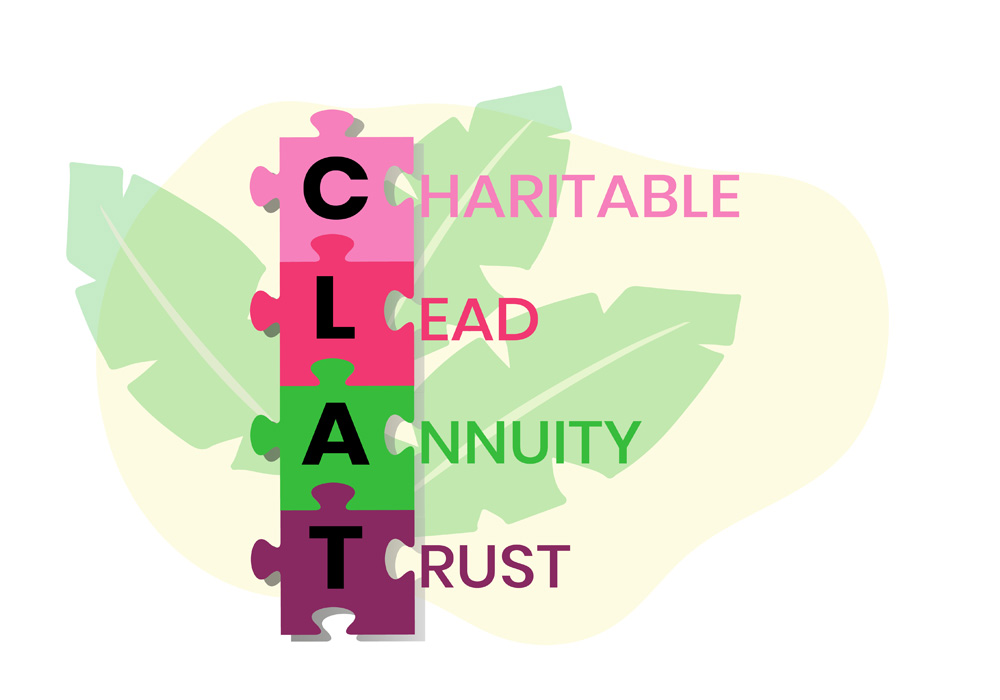
Charitable Lead Trust (CLT) is an irrevocable trust where a designated charity receives a stream of payments for a specified term, after which the remaining assets are transferred to non-charitable beneficiaries, such as family members or heirs.
The donor receives a charitable deduction for the present value of the interest received by the charity, while the value passed to the non-charitable beneficiaries is considered a taxable gift by the grantor.
Charitable remainder unitrust (CRUT) is a trust where an amount is payable annually to a recipient (either the donor or other beneficiaries) for a term of years or for the life of the beneficiary(ies) which amount is a fixed percentage (not less than 5% but not more than 50%) of the net fair market value of the trust’s assets, with the remainder passing to charity at the end of the term or at the end of the beneficiary’s life.
As Indiana estate planning attorneys, we have come to realize that so many aspects of the estate planning process are not about death at all, but about living, and we work to ensure that all components of our clients’ estate plans reflect their own values and beliefs.
– by Rebecca W. Geyer
